
Expert Support
Available 24/7 via chat
Available 24/7 via chat

Last Updated: September 25, 2026
A niche fragrance is a scent produced by a small, independent house that prioritizes artistic composition over mass-market appeal, typically using higher concentrations of rare raw materials and releasing limited production runs. The benefits of using niche fragrances start there: these are scents built around a perfumer's vision, not a focus group's preference.
The main difference between niche and designer fragrance comes down to three things: ingredient quality, concentration, and distribution. Designer houses answer to shareholders and mass retailers; niche houses answer to a creative director and a small, loyal customer base.
Niche compositions typically use a higher percentage of fragrance oil and more expensive natural materials, while designer scents lean on synthetics to keep costs predictable at scale. A niche Extrait de Parfum might run 20% to 30% concentration, versus 5% to 15% for a standard Eau de Toilette.
Niche houses produce in smaller batches and sell through select boutiques rather than every mall counter. That scarcity is part of the appeal, but it also means batch variation exists: two bottles from different production runs can smell slightly different, and for collectors, that's a feature, not a flaw.
The benefits of niche fragrances fall into four categories: a scent profile you won't smell on everyone else, measurable performance differences in longevity and projection, craftsmanship that reflects a real artistic point of view, and an olfactory education you simply don't get from mass-market releases. According to Business Research Insights' 2026 luxury niche perfume market report, roughly 48% of consumers choose niche perfumes specifically for their unique scent profiles compared to mass-market alternatives.
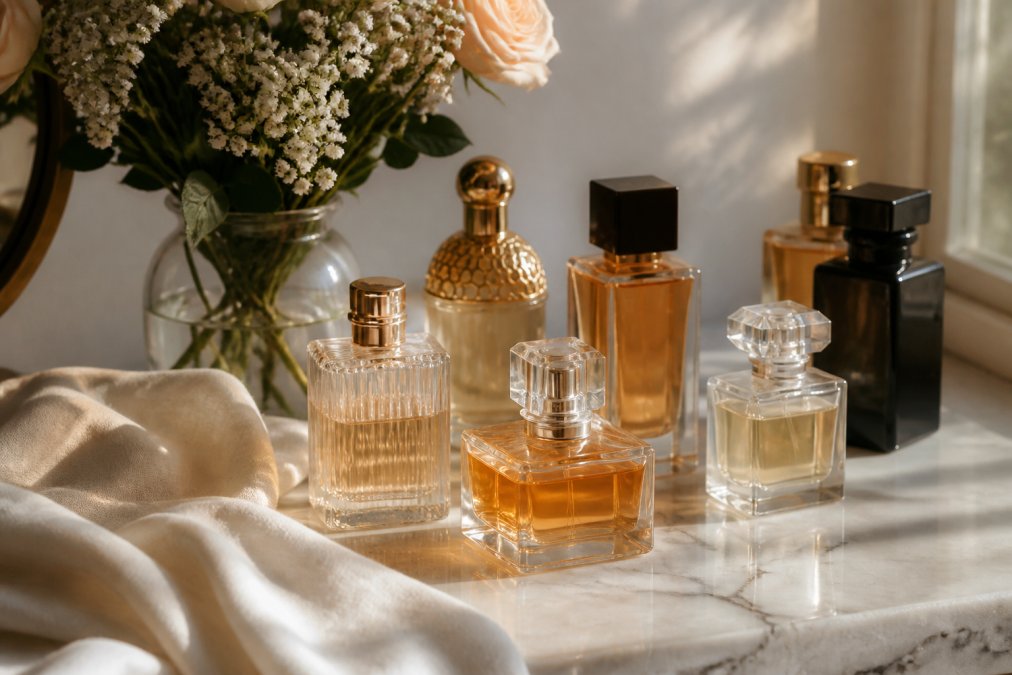
Niche houses take creative risks designer labels avoid: unconventional accords, unusual note combinations, and compositions built around a single bold idea rather than a safe crowd-pleaser. That's why a niche scent becomes a signature rather than a default.
Higher oil concentration usually translates to longer wear and stronger sillage, the trail a fragrance leaves behind you. An Extrait de Parfum can last 8 to 12 hours on skin, while a lighter Eau de Toilette may fade within 4. For anyone tired of reapplying by lunch, this alone justifies the price difference.
Many niche houses credit the individual perfumer by name and treat each release as a creative statement. According to Malte Karstan's 2026 fragrance industry analysis, growth in this segment is driven by consumers gravitating toward houses that emphasize storytelling, emotional resonance, and wellness positioning over generic mass-market marketing.
This is the benefit competitors rarely mention: wearing niche fragrances trains your nose. Because niche compositions tend to have more distinct, less blended structures, you can isolate notes as they evolve, the bergamot opening, the rose heart, the oud base, instead of smelling a single smooth cloud.
Mentor by Mind Games Gift Set (Women) →
A practical way to build this skill:
The best niche brands for beginners balance approachability with genuine craft. Here are five houses worth starting with, all available through AppleMango Fragrances.
| House | Signature Style | Standout Pick | Price |
|---|---|---|---|
| Nishane | Spiced florals, Turkish craft | Safran Colognise | $119.88 |
| Byredo | Luminous citrus florals | Bal d'Afrique | $315.79 |
| Tiziana Terenzi | Italian leather and fruit | Sirrah | $226.35 |
| Initio Parfums Privés | Bold amber and gourmand | Side Effect | $343.48 |
| Mind Games | Concentrated Extrait craftsmanship | Gambit | $351.76 |
Starting a niche fragrance collection works best when you sample first, buy second, and organize around scent families rather than brand loyalty. According to Scento's 2026 perfume consumer behavior study, consumers who sample before buying a full bottle show a 3.2x higher repurchase rate, and 94% report higher satisfaction with their final choice.

The biggest beginner mistake is buying full bottles before knowing your own taste. A disciplined sample-first approach solves that, and costs far less than people assume.
Here's the sequence that works:
A fragrance is not static. It moves through three phases, top, heart, and base, and the phase you smell at the counter is rarely the one you'll live with all day.
Niche bottles cost more, so they deserve better storage than a sunlit bathroom shelf. Fragrance molecules degrade through three main pathways: ultraviolet light, heat, and oxygen exposure. Each one shortens shelf life and shifts the scent.
Practical rules:
Mentor by Mind Games Gift Set (Women) →
Once you have two or three bottles you love, the temptation is to keep buying in the same lane. Resist it. A collection with range, a fresh daytime scent, a warm evening scent, and one bold signature, covers more situations than five variations on the same theme.
Niche perfumes typically cost between $120 and $425 per bottle, and the price reflects raw material costs, higher concentration, and smaller production runs. The global luxury niche perfume market is projected to reach $7.6 billion, according to Intel Market Research's projection reported by Forbes, which tells you buyers are willing to pay for that difference.
Three misconceptions come up constantly.
"Niche always means better." Not true. According to ResearchGate's study on fragrance luxury brand extension, the emotional value of a fragrance matters more to consumers than its functional utility. A designer scent that makes you feel confident beats a niche bottle that doesn't, regardless of price.
Niche fragrances come from houses focused solely on perfume, while designer brands typically make fashion, accessories, and fragrance as a secondary line. This means niche houses can prioritize creative composition and rare raw materials over mass-market appeal. Designer scents are often designed to please the widest possible audience, which can make them feel familiar. Niche perfumes lean into unconventional notes and stronger concentrations, giving you a scent that fewer people around you will be wearing.
Not automatically, but the structure of the niche market pushes toward higher quality. Niche houses typically use higher concentrations of fragrance oils, such as Extrait de Parfum, and invest in premium raw materials. They also produce in smaller batches, which allows more attention to composition. That said, quality still varies by house and perfumer. The practical way to judge is to sample first. Consumers who sample before buying report a 3.2x higher repurchase rate and 94% satisfaction with their final choice, according to Scento's 2026 consumer behavior data.
Three factors drive the price: ingredient cost, production scale, and exclusivity. Niche houses use higher concentrations of expensive raw materials, including natural absolutes and rare oud, rather than relying on cheaper synthetic substitutes. They also produce in limited batches, which means higher per-unit costs than mass-produced designer lines. The niche segment is also growing at 9.1% annually, and brands position themselves as luxury rather than commodity. The result is a bottle that costs more but typically delivers stronger longevity and a more distinctive scent profile.
Start by identifying the note families you already enjoy, whether that is citrus, oud, rose, or vanilla. Then order samples or discovery sets before committing to a full bottle. Sampling lets you experience how a fragrance evolves on your skin over several hours, including the top notes, heart notes, and dry-down. Pay attention to longevity and sillage. If a scent still smells good on you after six hours, it is worth the investment. More than 45% of premium fragrance buyers now seek personalized scent experiences, so take your time matching the composition to your personality.
Beginners should look for approachable compositions that are distinctive without being overwhelming. Citrus florals like Bal d'Afrique by Byredo offer a bright, wearable entry point. Spiced orientals like Safran Colognise by Nishane bridge the gap between familiar and exotic. For something warmer, Ani by Nishane layers Turkish rose with vanilla and precious woods. These three cover a range of scent profiles and price points, from $119.88 to $315.79, so you can explore different directions before settling on a signature scent.
{"one"=>"Select 2 or 3 items to compare", "other"=>"{{ count }} of 3 items selected"}