
Expert Support
Available 24/7 via chat
Available 24/7 via chat

Last Updated: September 12, 2026
The designer perfume supply chain is the network of growers, fragrance houses, manufacturers, distributors, and retailers that moves a scent from raw materials to a store shelf. It spans multiple continents and typically takes 12 to 24 months from harvest to launch. According to Grand View Research's perfume market analysis, the global perfume market reached $63.5 billion in 2026 and is projected to hit $96.1 billion by 2033.
Here's what matters: that growth has not made the pipeline simpler. It has made it more fragmented, more expensive to trace, and more vulnerable to leakage. At AppleMango Fragrances, we work inside this chain every day, sourcing authentic designer and niche bottles. This guide breaks down how designer perfume pricing works, where the grey market enters, and what a healthy supply chain makes possible for your next purchase.
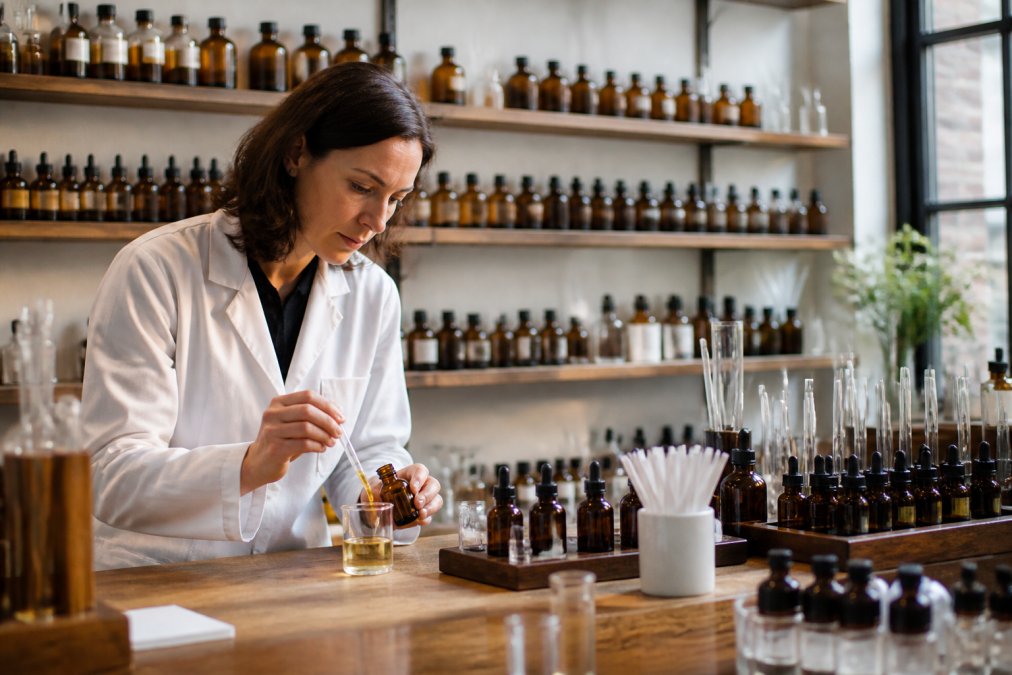
The chain starts with raw materials, and this stage sets both cost and risk. Natural ingredients like jasmine, rose, sandalwood, and bergamot are harvested seasonally, and a single kilogram of high-grade jasmine absolute can require hundreds of kilograms of hand-picked flowers. Synthetic aromachemicals fill the gap where naturals are scarce, costly, or inconsistent.
Provenance is the hard part. A fragrance may contain dozens of ingredients from a dozen countries, and each upstream supplier adds a layer of opacity. Research from MDPI's Sustainability journal found that the perfume industry struggles to integrate sustainable supply chain practices largely because of this high level of fragmentation.
Once materials are secured, a fragrance house and its perfumers build the formula. Perfume formulation is where art meets chemistry: a perfumer balances top, heart, and base notes, then iterates through dozens of trials before a designer approves the final scent.
This stage also determines cost. A niche luxury category composition using rare naturals costs far more to produce than a mass-market formula built on synthetics. The University of Vaasa identified four factors that shape how a perfume supply chain is designed: demand variation, market mediation costs, product lifecycle, and supply chain responsiveness. Get those wrong and a launch stalls before it ships.
Designer perfume pricing works by stacking margins at each stage of the chain, from raw material to retail counter. Every handoff adds cost, and the final retail price reflects all of them. Understanding this stack explains why two bottles with similar ingredients can differ by hundreds of dollars.
| Stage | What Happens | Typical Share of Shelf Price | Cost Driver |
|---|---|---|---|
| Raw materials | Harvesting, extraction, synthetics | Roughly 2-10% | Naturals like jasmine absolute and sandalwood; synthetics stabilize the low end |
| Fragrance oil compounding | Perfumer formula, trials, maceration | Roughly 5-15% | Perfumer time, trial iterations, captive-molecule licensing |
| Bottle, cap, and carton | Glass, metallized caps, rigid boxes | Roughly 5-15% | Glass weight, custom molds, premium finishing |
| Manufacturing and fill | Blending, maceration, filling, QC | Roughly 3-8% | Volume, line changeovers, alcohol handling |
| Marketing and brand | Advertising, sampling, influencer seeding | Roughly 15-30% | Campaign scale, celebrity licensing, sampling programs |
| Distribution and retail | Freight, duties, warehousing, retail margin | Roughly 30-50% | Channel mix, department-store margin, duty and freight |
Those ranges are directional, not fixed. A mass-market designer launch and a niche extrait can sit at opposite ends of every row. But the pattern holds: the juice is rarely the biggest line item. Packaging, marketing, and retail margin usually dominate the shelf price, which is why two fragrances with similar formulas can land at very different price points.
Three levers move the final number more than anything else:
A useful mental model: think of the shelf price as four buckets, juice, package, brand, and channel. For most designer launches, the juice bucket is the smallest. The package and channel buckets are the largest. That is why a discount that looks too good to be true usually comes out of the channel bucket, not the juice bucket, and why grey-market and counterfeit stock can undercut authorized retail without the formula changing at all.
The luxury fragrance market reached $57.28 billion in 2026, up from $52.13 billion in 2025, according to Scento's luxury fragrance cost analysis. That premium pricing is not only about ingredients. Marketing, packaging, and retail placement often account for the biggest share of the shelf price.
Logistics moves finished bottles through regional warehouses, duty handling, and retail distribution networks before they reach a counter. Perfume is classified as a hazardous material for air freight because of its alcohol content, which limits shipping options and raises cost. That single classification shapes almost everything downstream.
A typical path looks like this:
Each handoff is a point where inventory can be diverted, delayed, or mislabeled. The more hands, the more leakage risk.
Distribution leakage is a structural outcome of the current luxury perfume supply chain model, per Zouheir Guedri's analysis of fragrance supply chains. When authorized channels are bypassed, authentic bottles can surface through unauthorized sellers at suspiciously low prices, and so can counterfeits.
The common entry points are predictable:
The last several years exposed how fragile this network is. Shipping disruptions, port congestion, and climate-driven raw-material shortages have all delayed launches and tightened supply. In response, brands have diversified sourcing, added regional inventory buffers, and pushed for more visibility into upstream suppliers.
Digital transformation is the emerging answer. IoT sensors in warehouses and containers can track temperature and location, while blockchain-based ledgers can record ingredient provenance at each upstream supplier. A shared ledger would let a fragrance house verify ethical sourcing and environmental claims rather than trusting self-reported audits. Most of this is still early-stage, but the direction is clear: the brands that can trace a bottle from field to counter will be the ones that can defend both their pricing and their authenticity claims.
For buyers, the practical implication is simple. A seller who can show a verifiable chain of custody, batch codes, authorized sourcing, and a clear return policy, is operating inside the resilient part of the network. A seller who cannot is operating in the gap.
Authenticity comes down to verifiable sourcing and a few physical checks. A genuine bottle should have a consistent batch code across the box and the glass, clean crimping on the sprayer collar, and packaging that matches the brand's current design.
AppleMango Fragrances guarantees 100% authentic stock and ships fast across the United States.
Traceability is the industry's biggest unresolved problem. Sustainable supply chain management in perfumery requires knowing where every ingredient originated, and most legacy inventory systems cannot deliver that visibility.
Brands like Bastille Parfums have rebuilt their inventory systems specifically to close this gap, per an industry case study on fragrance supply chains. The stakes go beyond sustainability marketing. The Business Continuity Institute has flagged reputational risk from unethical labor practices, noting that some prestigious beauty brands have been linked to the use of minors in luxury perfume supply chains.
Digital transformation and blockchain-based tracking are the emerging answers. A shared ledger of ingredient provenance would let a fragrance house verify ethical sourcing and environmental impact claims at each upstream supplier, rather than trusting self-reported audits.
The best luxury perfume deals in 2026 come from efficient sourcing, not from cutting corners.
That distinction matters. A deal built on a healthy supply chain looks like this:
AppleMango Fragrances curates niche, designer, indie, inspired-by, and Middle Eastern fragrances from top luxury brands and delivers them quickly across the country. The result is access to high-end perfume without the grey-market gamble.
Every bottle you buy is the end of a long, fragmented chain, and the seller you choose determines whether that chain stayed intact. Post-pandemic resilience efforts have pushed brands toward more diversified sourcing and better supply chain visibility, which benefits buyers who know what to look for.
The practical takeaway: ask where the bottle came from, verify the batch code, and buy from sellers who can answer both questions without hesitation.
The challenge with designer fragrance is that the supply chain behind the bottle is usually invisible, which is exactly where counterfeits and grey-market stock hide. AppleMango Fragrances solves that by curating 100% authentic niche, designer, indie, and Middle Eastern fragrances from top luxury brands, backing every order with fast US shipping. If you want a sophisticated scent without the authenticity gamble, explore the AppleMango collection and find the fragrance that defines your style.
The designer perfume supply chain moves through six main stages: raw material procurement (flowers, resins, essential oils, and synthetic aromachemicals), fragrance house formulation by a perfumer, safety testing and regulatory compliance, scent manufacturing and quality control, packaging logistics, and retail distribution. Each stage adds cost and time. The global perfume market is valued at $63.5 billion in 2026 and is projected to reach $96.1 billion by 2033, according to Grand View Research, so even small inefficiencies at any stage ripple across the entire industry.
Authenticity depends on an unbroken chain of custody. When bottles move through authorized distributors, ingredient provenance and batch codes stay verifiable. Distribution leakage, a structural outcome of the current luxury perfume supply chain identified by industry analyst Zouheir Guedri in 2026, allows product to slip into grey market channels where storage conditions and sourcing are unknown. Buying from a seller that can explain where its stock originates is the most reliable way to avoid counterfeit or improperly stored fragrance.
Four cost layers drive retail pricing: raw materials (natural absolutes like jasmine or oud cost far more than synthetic alternatives), formulation and testing, packaging (glass, caps, and boxes are a meaningful share), and distribution margins across wholesalers and retailers. Market mediation costs and demand variation also shape pricing, according to University of Vaasa research on perfume supply chains. This is why two fragrances with similar scent profiles can sit at very different price points.
Fragrance houses sit between raw material suppliers and the brand on the label. They employ perfumers, maintain ingredient libraries, and handle formulation, safety testing, and regulatory compliance. A designer brand typically briefs the house, receives scent proposals, and selects one for production. The house model explains why competing brands sometimes release fragrances with overlapping notes: the same fragrance house may have developed both. The luxury fragrance market reached $57.28 billion in 2026, per Scento, and fragrance houses capture a share of that value at the formulation stage.
{"one"=>"Select 2 or 3 items to compare", "other"=>"{{ count }} of 3 items selected"}