
Expert Support
Available 24/7 via chat
Available 24/7 via chat

Last Updated: September 19, 2026
If you've ever watched a favorite bottle turn sharp and sour, you already know the sting. How to store expensive perfume properly comes down to three enemies: heat, light, and moisture. Get those under control and a fragrance can stay true for years.
This guide breaks down the science and the practical steps. We'll cover where to keep your bottles, how long they last, and how to spot spoilage before you spray.
Here's the part most people get wrong: perfume doesn't "expire" on a fixed date like milk. It degrades based on how it's kept.
Store expensive perfume in a cool, dark, dry place with a stable temperature. A closed drawer or closet shelf away from windows works best. The goal is a consistent climate, not a cold one.
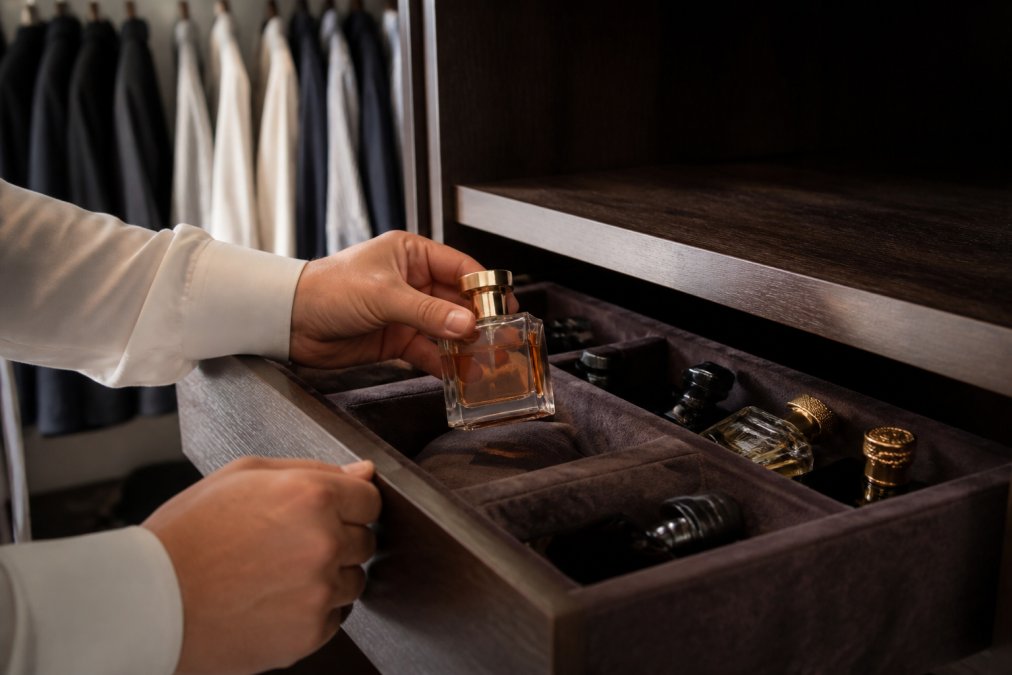
Three factors decide whether your scent survives:
Most guides tell you to keep perfume cool and dark without explaining why. Here's the mechanism, because understanding it changes how you store a bottle.
Steady beats cold. A bottle that swings from a warm windowsill to an air-conditioned room goes through thermal shock. Each shift stresses the chemical composition inside.
Light is the quieter threat. Direct sunlight and ultraviolet light attack the fragrance notes directly. Oxidation follows, and once it starts, you can't reverse it.
Humidity matters less than heat and light, but it still does damage. High moisture in the air can seep past a loose cap or a degraded seal, introducing water into an alcohol-based formula. Water and ethanol mix, but the added water can shift how the aroma compounds dissolve, which changes how they evaporate on skin.
None of these steps require special equipment. They require consistency, which is what actually protects the chemistry inside the bottle.
Storing perfume in the bathroom is the single worst habit for scent integrity. Bathrooms combine heat, humidity, and temperature swings from every shower. That trio is exactly what breaks a fragrance down.
Perfume shelf life typically runs three to five years when stored well, and one to three years when kept poorly. Concentration matters too. A stronger formula holds up longer than a lighter one.
Higher fragrance concentration means better shelf stability. Parfum and eau de parfum hold up longer than eau de toilette or cologne. The alcohol-to-oil ratio changes how fast the formula breaks down.
| Concentration | Typical Shelf Life | Best Storage |
|---|---|---|
| Parfum | 5-7 years | Cool drawer, boxed |
| Eau de parfum | 4-5 years | Dark closet shelf |
| Eau de toilette | 3-4 years | Airtight, away from light |
| Cologne | 2-3 years | Cool, dark, sealed |
The reason parfum outlasts cologne comes down to chemistry, not marketing. Fragrance concentration is the percentage of aroma compounds dissolved in the alcohol-and-water carrier:
Some modern fragrances skip alcohol in favor of oil or water bases. Oil-based formulas oxidize differently, the oils themselves can go rancid, producing a waxy or stale smell rather than the sharp vinegar note of oxidized alcohol-based scents. Water-based formulas are more vulnerable to microbial growth if the preservative system is weak, so keep them sealed and cool. Check the label: if alcohol isn't listed first, treat the bottle as more perishable and store it accordingly.
Match your storage effort to the concentration. A parfum in a boxed drawer is safe for years. A cologne on a sunny shelf may not survive one summer. When in doubt, keep every bottle cool, dark, dry, and sealed, and buy the lighter concentrations in sizes you'll actually finish.
You can tell perfume has gone bad by smell, color, and texture. Trust your nose first. A scent that turns sharp, sour, or vinegary has oxidized.
Watch for these visual indicators of spoilage:
Travel storage needs a different approach than home storage. Movement, light, and temperature swings all increase on the road. Pack with that in mind.
Follow these steps:
A spoiled bottle isn't always trash. Some people repurpose degraded perfume as a room spray or linen mist for closets. Just test it on fabric first.
Refrigeration does not make perfume stronger, though it can slow degradation by keeping the fragrance at a consistent cool temperature. Southern Living notes that while some sources suggest refrigerating perfume to prolong its lifespan, it is not strictly necessary for proper preservation. If you do refrigerate, use an airtight seal and avoid temperature fluctuations from frequent opening, which can cause thermal shock and break down the chemical composition of the scent notes.
Most perfumes last three to five years when stored properly in a cool, dark place away from direct sunlight and humidity. Fragrance concentration affects shelf life: eau de parfum and parfum tend to last longer than eau de toilette because they contain a higher percentage of fragrance oils. Once a bottle is opened, oxidation begins, so an airtight seal and minimal air exposure help preserve scent integrity over time.
Storing perfume lying down is not ideal. Keeping the bottle upright ensures the atomizer tube and cap maintain a proper seal, reducing the risk of leakage and air exposure that accelerates oxidation. If you must lay a bottle flat for travel, wrap it tightly and return it to an upright position as soon as possible. An upright bottle in its original box offers the best protection for long-term storage.
Yes, keeping perfume in its original box is one of the simplest ways to protect it. The box shields the bottle from ultraviolet light, which breaks down fragrance molecules, and provides a barrier against humidity and temperature fluctuations. If you no longer have the box, store the bottle in a dark drawer or a closed cabinet away from heat sources and direct sunlight to maintain its scent profile.
Building a collection is the easy part. Keeping every bottle smelling the way it did on day one is the real work. AppleMango Fragrances helps you start with authentic scents worth protecting, from niche finds to designer favorites. Explore the collection and discover a fragrance that defines your style, delivered fast.
{"one"=>"Select 2 or 3 items to compare", "other"=>"{{ count }} of 3 items selected"}