
Expert Support
Available 24/7 via chat
Available 24/7 via chat

Last Updated: November 1, 2026
Quick Summary
You can spot fake perfume packaging by its packaging if you check the details counterfeiters skip: cellophane should wrap tightly with a straight seam and even crimping, print should be crisp with no blurry text or swapped letters, and the batch code on the box must match the bottle exactly. One odd detail proves little, but a pattern of flaws is a strong warning sign.
Fake perfume packaging fools people because the counterfeiters copy the easy parts first: box shape, logo placement, bottle silhouette.
Authentic designer, niche, and Middle Eastern fragrances are what AppleMango Fragrances sells, and knowing what a genuine box looks like is central to buying them with confidence.
The key to spotting fake perfume packaging is to recognize that what most buyers get wrong is treating packaging as a single pass-or-fail test.
Below, we walk through each check in order, from the outer wrapping to the bottle itself, so you can inspect any fragrance with a clear method.
Authentic perfume packaging is tight, clean, and consistent. The box should feel solid, the wrapping should sit flat, and the print should look sharp at arm's length.
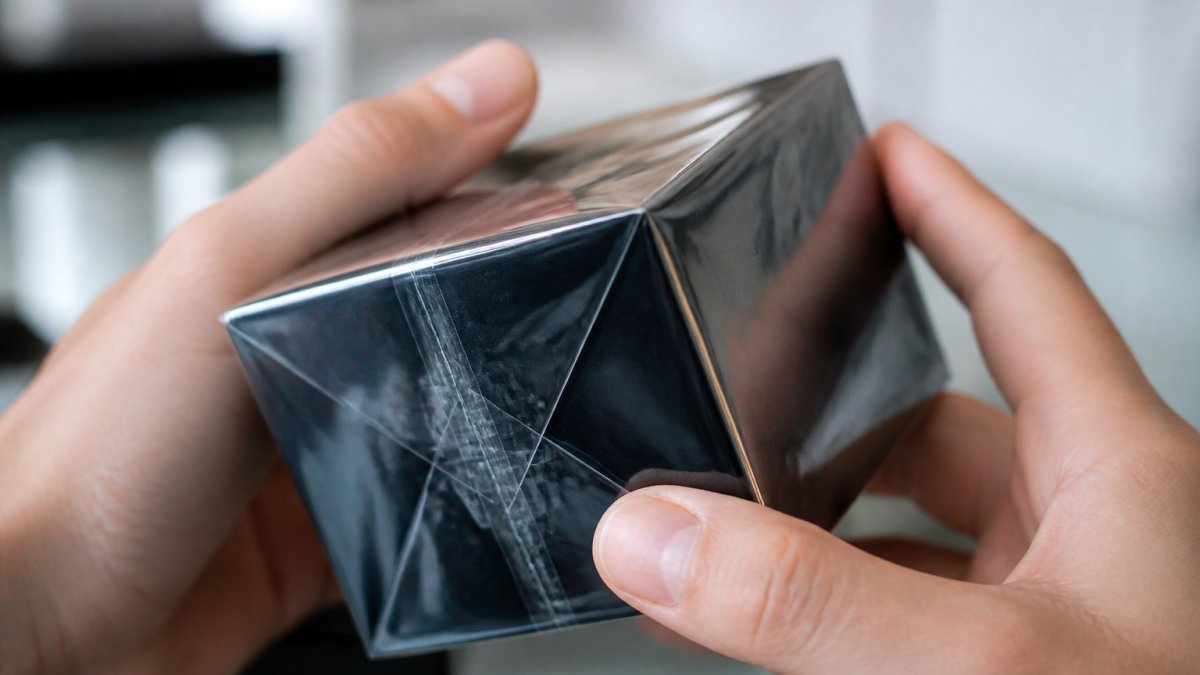
Genuine cellophane wraps tightly and looks clear, not cloudy. The seam should run in a straight line, and the crimped edge should show an even, repeating pattern that is hard to replicate in counterfeits. Loose wrapping, gathered edges, or a seam that wanders are classic warning signs.
Watch out: a resealed box can look almost new, but a second layer of tape or a wrinkled seam usually gives it away.
Real boxes use crisp type and rich, even color. Fakes often show blurry text, swapped letters, wrong font sizes, or colors that look flat. Hold the box under good light and compare the logo to a photo from the brand's own site. You can also browse Viktor Rolf Designer Fragrances to compare genuine boxes and bottles.
The bottle and label tell you more than the box does. Real glass looks clear and even, the label sits straight, and the cap fits with a solid click.
Start with the label. It should sit flat, with no bubbles or crooked edges. It should exhibit the high quality expected from legitimate brands.
Next, test the cap and spray. A real cap has some weight and sits flush; it will feel secure when twisted on.
One study used gas chromatography-mass spectrometry to detect counterfeit perfumes, which shows how deep authentication can go.
A batch code is a short alphanumeric string stamped, printed, or etched on the box and the bottle. It identifies the production batch, which usually encodes a date and a plant or line.
The reason is simple: counterfeiters can read a real code off a real bottle and print it on a thousand fakes. A code that looks correct and matches between box and bottle tells you the packaging was assembled consistently.
On most designer and niche fragrances, the batch code appears in two places:
Note where the code sits on a known-genuine bottle of the same product before you judge a suspect one.
A mismatch between box and bottle is a strong warning sign. A match is a green light for one check only. Pair the code check with the print, seal, and seller checks elsewhere in this guide, and contact the brand directly when a code is the only thing giving you doubt.
Not every packaging difference means fake. Brands change boxes between editions, reformulations, and markets, and those changes are legitimate. A reader who panics at every variation ends up returning real bottles, and a reader who ignores variation entirely misses real fakes. For the explanation behind legitimate market and edition differences, see Grey Market Perfume: What It Means and Why It Matters.
The fix is to compare like with like. Match the batch, the market, and the edition before you call something fake, and when the variation is the only concern, verify with the brand rather than a forum.
Buying authentic designer perfume online comes down to the seller, not just the box. A trusted seller with a clear sourcing story beats a perfect-looking listing from an unknown shop every time.
Start with these seller checks:
Price alone does not prove a fragrance is fake. A low price is a reason to investigate, not a verdict, since sales and clearance can explain it. Pair the price check with the seller's reputation and the packaging checks above.
Some flaws are just wear and tear. A dented corner, a scuffed box, or a loose cap can come from shipping, not from a counterfeiter. Telling the two apart keeps you from rejecting a genuine bottle.
| What You See | Likely Cause | What to Do |
|---|---|---|
| Scuffed or dented box corner | Shipping damage | Check bottle and codes before judging |
| Wrinkled cellophane | Reseal or rough handling | Look for a second seam or tape line |
| Slightly loose cap | Normal fit variance | Test the spray and check the collar |
| Blurry small text | Possible fake | Compare to brand photos |
| Mismatched batch codes | Strong warning sign | Ask the seller before buying |
| Uneven spray or leak | Faulty unit or fake | Request a return or replacement |
Visual checks have limits. A skilled fake can pass every look test, which is why scent, seller history, and batch codes all matter. No single check is proof on its own.
If you think you bought a fake, act quickly and keep your evidence. Save the box, the bottle, the order confirmation, and photos of every flaw. Then contact the seller in writing and ask for a return or refund.
Next steps:
When you are ready for a genuine replacement, you can explore the AppleMango Fragrances collection.
Look for loose or gathered cellophane, seams that are glued rather than crimped, blurry or misspelled print, and colors that look washed out next to a known authentic box. Crooked labels, uneven cap fit, and a spray nozzle that leaks or spritzes unevenly are also warning signs. None of these proves a fake on its own, so treat each one as a reason to investigate further rather than a final verdict.
No. A batch code is a production lot number, and counterfeiters copy real codes onto fake boxes all the time. What a batch code can do is help you check consistency: the code on the box should match the code on the bottle, and it should fit the brand's known format. Use it as one piece of evidence alongside packaging quality, seller reputation, and the scent itself, not as a standalone authenticity test.
Not necessarily. Brands change boxes, caps, and label layouts across editions, reformulations, and regional markets, so a bottle that looks different from an older one you own may still be genuine. Check whether the differences look like deliberate design changes or like sloppy production: clean new typography and updated branding are normal, while swapped letters, misaligned labels, and weak color saturation are not.
Stop using it, keep the box, bottle, and receipt, and photograph the packaging details before you contact anyone. Reach out to the seller first and ask for a return under their policy. You can also contact the brand's customer service with photos and the batch code to ask whether the packaging matches their records. If the seller will not resolve it, a chargeback through your card issuer is the next step.
Spotting a fake takes more than one glance, and that is the point. Counterfeits are built to pass a quick look, so the real test is a careful one: tight wrapping, sharp print, a clean bottle, matching batch codes, and a seller you trust. At AppleMango Fragrances, every bottle we ship is 100% authentic, backed by fast US shipping and a curated selection of designer, niche, indie, and Middle Eastern scents. Explore our collection and find a fragrance you can trust from the first spray.
{"one"=>"Select 2 or 3 items to compare", "other"=>"{{ count }} of 3 items selected"}
