
Expert Support
Available 24/7 via chat
Available 24/7 via chat

Last Updated: October 5, 2026
Why are Middle Eastern fragrance houses popular? Because fragrance in much of the region is not a finishing touch; it is a daily ritual, a form of hospitality, and a marker of identity. The cultural weight behind the category is what separates it from a trend, and it shows up in specific practices rather than vague atmosphere.
Welcoming a guest with fragrance is a long-standing custom across many communities in the region. A host may offer perfume oil at the door, pass a bakhoor burner through the room, or scent a guest's clothing before they leave. The gesture is not decorative; it is a way of honoring the visitor and extending the household's presence with them after they go.
Bakhoor is a blend of agarwood chips, resins, oils, and sometimes florals, burned on a mabkhara, a small charcoal or electric burner. The smoke is directed toward clothing, hair, and sometimes the home itself.
This practice also explains why many Middle Eastern houses release matching body oils, hair mists, and home fragrances alongside their perfumes. The bottle is one part of a layered scent routine, not the whole of it.
Scent accompanies prayer, celebration, and everyday routine. Many people apply perfume oil before prayer, after bathing, and before social gatherings. Fragrance is also commonly given as a gift, which reinforces the emotional association between scent and relationship.
According to Market Data Forecast's Middle East Perfume Market analysis, the regional perfume market is estimated to reach USD 4.34 billion in 2026 and is projected to reach USD 7.52 billion by 2034. At AppleMango Fragrances, we see that appetite in our own orders: American shoppers are seeking out oud, amber, and rose compositions with the same enthusiasm once reserved for European designer releases.
When a house is built around ritual rather than a seasonal launch calendar, the compositions tend to be designed for repeated, personal wear rather than for a single marketing moment. That is part of why the category feels different on the shelf: the scents are often denser, the packaging is often refillable or oil-based, and the marketing leans on heritage rather than celebrity.
This guide explains what drives the popularity, which notes define the style, and how to wear these fragrances well.
Middle Eastern perfume brands have moved from specialty import shops to mainstream American wish lists. Two forces drive this.
The shift shows up in the numbers. The niche perfume market is forecast to reach €4.85 billion in 2026, with a projected 9.1% compound annual growth rate, according to Scento's 2026 niche perfume statistics.
Distinctive scent profiles, rich compositions, presentation, and competitive price points are the factors most often cited for attracting U.S. consumers, per Al Hussein Perfumes' analysis of the U.S. market.
Middle Eastern fragrance notes center on materials with depth: oud, amber, musk, rose, spices, resins, and incense. These are not light accents. They form the backbone of a composition and dictate how it wears over hours.
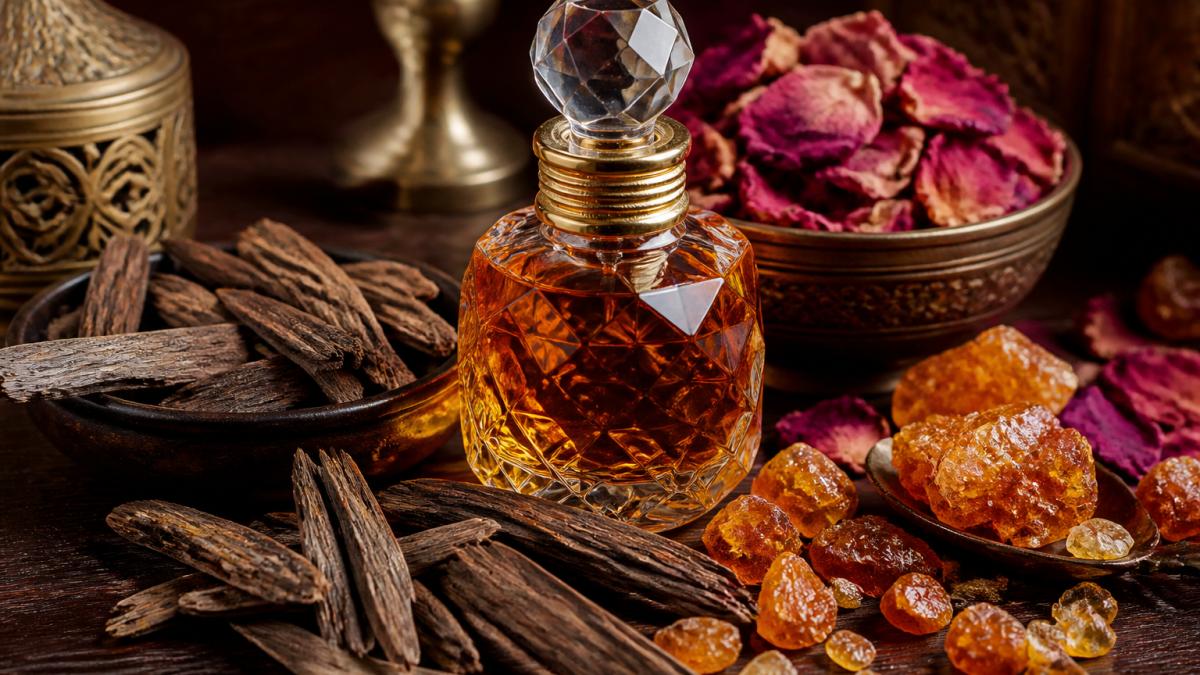
Oud is a dark, resinous oil produced when agarwood trees respond to infection, and it anchors much of Middle Eastern perfumery. Its character is smoky, woody, and animalic, which is exactly why it reads as bold to noses trained on citrus-forward European releases. Oud appears in attar form, in perfume oil, and in modern eau de parfum concentrations.
Amber in perfumery is a warm accord, usually built from resins, balsams, and vanilla, that gives a fragrance its golden base. Musk supplies the soft, skin-close warmth that makes a scent feel personal rather than projected. Rose, particularly the deep Taif variety, bridges the two: floral at the top, jammy and rich as it dries down. Together with spices and resins, these materials create the opulent, layered scent profiles that define the category.
Longevity is the single most common reason American shoppers give for trying a Middle Eastern house, and it is also the claim most often repeated without explanation. The honest answer is that "Middle Eastern perfumes last longer" is not a universal rule. It is a pattern produced by specific formulation and application choices, and it varies by house, by concentration, and by the person wearing it.
Here is what actually drives wear time.
Fragrance concentration is the percentage of aromatic oil in the finished product. The categories most shoppers encounter are:
Many Middle Eastern houses default to EDP or extrait where a Western designer release at a similar price point may ship as an EDT. That single choice accounts for a large share of the perceived difference. It is not magic; it is a higher oil load per spray.
Fragrance materials evaporate at different speeds. Top notes, citrus, light aromatics, aquatic accords, are small, volatile molecules that flash off within 15-30 minutes. Heart notes, florals, spices, sit in the middle.
Oud 01 by Swiss Arabian Eau De Parfum Spray 1.7 oz (Men)(Unisex) →
A composition built around a heavy base therefore has a longer tail by design. A citrus-forward EDT built for a fresh opening has less material left to carry it into hour six.
Longevity is not only about the bottle. Dry skin holds fragrance less well than oily skin, because oils slow evaporation. Warm skin and warm, humid air tend to amplify projection but can shorten wear time by accelerating evaporation.
This is why two people can wear the same oud extrait and report completely different wear times. It is also why a fragrance that lasts 10 hours in a cool, dry climate may fade in 5 in a humid summer.
How you apply changes wear time more than most shoppers expect:
A well-made Middle Eastern EDP with a heavy base will often run 6-9 hours on skin and longer on fabric. An extrait can push past 10.
Oud 01 by Swiss Arabian, available at our Oud 01 listing, illustrates the pattern: a smoky oud opening over incense and rose, settling into musk, amber, and sandalwood that lingers for hours.

The honest answer is that neither style is superior; they optimize for different goals.
| Dimension | Middle Eastern Style | Western Designer Style |
|---|---|---|
| Concentration | Often EDP or extrait | Frequently EDT |
| Core materials | Oud, amber, musk, resins | Citrus, light florals, clean musk |
| Projection | Strong, room-filling | Moderate, office-friendly |
| Wear time | Long, often 8+ hours | Variable, often 4-6 hours |
| Price positioning | Often lower per ounce | Higher, brand-driven |
| Best for | Evening, statement wear | Daily, low-key settings |
Western designers tend to favor freshness and broad appeal, which makes them safe for an office. Middle Eastern houses favor density and character, which makes them memorable.
For a middle path, Amber Oud Aqua Dubai by Al Haramain, listed at our Amber Oud Aqua Dubai page, pairs an aquatic, citrus opening with an amber and oud heart, giving Western freshness over a Middle Eastern base.

Treating Middle Eastern perfumery as one style is a mistake. Regional traditions differ meaningfully, and the differences show up in the bottle.
There is also a persistent stereotype worth correcting. That view is inaccurate: a number of these houses release original compositions, and the discussion of Middle Eastern houses producing original fragrances makes the case directly. Asad Zanzibar Limited Edition by Lattafa, available at our Asad Zanzibar listing, is a good example: marine notes and lavender over cashmeran, cinnamon, and tonka bean, an original profile rather than a copy.
Choosing well comes down to matching notes to occasion and testing before committing.
AppleMango Fragrances curates 100% authentic niche, designer, indie, and Middle Eastern fragrances, ships from within the United States, and offers a 30-day return policy on unopened items, so you can order with a clear path back if a scent does not suit you.

Several factors converge: distinctive scent profiles built on oud, amber, and rose; strong performance that lasts through a workday; and competitive pricing compared to Western designer labels. E-commerce and social media discovery have made these houses accessible to U.S. shoppers who previously had to travel or rely on specialty importers. The Middle East perfume market is estimated to reach $4.34 billion in 2026, reflecting broader category momentum that U.S. buyers are now participating in directly.
The biggest differences are concentration and composition. Middle Eastern houses often favor higher oil concentrations, richer base notes like oud and amber, and less emphasis on light citrus or aquatic openings. Western designer fragrances tend to prioritize broad appeal and lighter wearability. Neither is better; they serve different preferences. If you want a scent that announces itself and lingers, Middle Eastern perfumery usually delivers more intensity per spray.
Many are, largely because of higher fragrance oil concentrations and heavy base notes like oud, amber, and musk that evaporate slowly. Extrait de parfum and eau de parfum concentrations common in this category typically outperform lighter eau de toilette formulas. Longevity also depends on skin chemistry, application method, and whether you moisturize before spraying. Applying to pulse points and letting the fragrance dry naturally, rather than rubbing, helps it last longer.
Start with a lighter, fresher composition if you are new to the category. Look for fragrances that blend oud or amber with aquatic, citrus, or floral notes for versatility. Asad Zanzibar by Lattafa, for example, opens with marine notes and lavender before settling into amber and sandalwood, making it wearable for daily use. If you want something bolder, try a straight oud or rose-forward scent for evenings. Sampling before committing to a full bottle is always wise.
The appeal of Middle Eastern fragrance houses keeps growing because the category delivers what modern buyers actually want: distinctive compositions, real performance, and fair pricing. The hard part is finding a trustworthy source. AppleMango Fragrances addresses that with verified 100% authentic stock, fast U.S. shipping, and a curated selection spanning Swiss Arabian, Al Haramain, Lattafa, and more. Explore the collection and find the scent that defines your style.
{"one"=>"Select 2 or 3 items to compare", "other"=>"{{ count }} of 3 items selected"}