Skip to content
Why Niche Fragrances Have Better Longevity: A 2026 Guide

Why Niche Fragrances Have Better Longevity: A 2026 Guide

Table of Contents

Last Updated: October 2, 2026

The Science Behind Niche Fragrance Longevity

Niche perfumes typically carry an oil concentration of 15-30%, while designer fragrances sit closer to 5-15%, according to Alexandria UK's niche vs designer comparison. That gap explains a lot about why niche fragrances have better longevity, but concentration alone doesn't tell the whole story.

Evaporation Rates and Molecular Weight

Evaporation rate is the speed at which a fragrance's molecules leave your skin and enter the air. Smaller, lighter molecules in top notes evaporate within minutes. Heavier base molecules like oud, sandalwood, and musk cling to skin for hours.

Fixatives and Base Notes That Anchor a Scent

Fixatives are ingredients that slow evaporation, and niche houses lean on them heavily. According to Prosody London's analysis of long-lasting niche fragrances, base notes like sandalwood, ambergris, and tonka drive 10-12 hour longevity, with some wearers reporting the scent persists up to 16 hours.

Niche vs Designer Fragrance Longevity: What the Numbers Show

Niche fragrance longevity ranges from 8-24 hours, compared with the 4-8 hours typical of designer Eau de Toilette formulas, per Alexandria UK's 2026 benchmark. The niche perfume market is projected to reach €4.85 billion, and over 45% of premium fragrance sales are driven by enhanced longevity, according to Scento's 2026 niche perfume statistics.

Factor Niche Designer
Oil concentration 15-30% 5-15%
Typical longevity 8-24 hours 4-8 hours
Fixative use Heavy, ingredient-led Moderate, cost-managed
Batch consistency Varies by batch Highly standardized

The Contrarian Take: When Designer Performs Just as Well

Longevity is determined by ingredients, concentration, and your individual skin chemistry, not by a brand's business model. Designer houses produce at scale, which allows extensive fine-tuning and consistent performance across batches. If a designer extrait lists the same heavy base notes, it can match a niche scent hour for hour.

Perfume Concentration Guide: Extrait, EDP, EDT, and Cologne

Concentration is the single biggest lever on longevity, but the number on the label is only half the equation. What matters is how much perfume oil is dissolved in the alcohol base and how well that oil is anchored by fixatives. A 30% extrait built on volatile top notes can fade faster than a 15% EDP built on heavy resins.

  • Extrait de Parfum (Parfum): Roughly 20-40% perfume oil. The highest concentration sold at retail. Lower alcohol content means slower evaporation and a closer, more intimate sillage, you smell it on yourself for hours, but it does not fill a room. Best for evening and cold weather.
  • Eau de Parfum (EDP): Roughly 15-20% oil. The workhorse for most niche releases and the sweet spot for longevity-to-projection balance. Most 8-12 hour wear times come from this tier.
  • Eau de Toilette (EDT): Roughly 5-15% oil. Lighter, brighter, and built for warm weather or daytime. Expect 3-5 hours before the base notes take over.
  • Eau de Cologne (EDC): Roughly 2-5% oil. Refreshing and short-lived by design, the original cologne style was meant to be reapplied through the day.
  • Aftershave / Splash: Often 1-3% oil. Not a longevity product; treat it as a scented toner.

Why the Percentage Alone Doesn't Predict Wear Time

Three variables sit between the label and your skin:

  1. Alcohol-to-oil ratio. Higher oil means less alcohol to flash off, so the opening is quieter and the dry down arrives faster. That is why extraits often smell "flatter" for the first ten minutes, the top notes are muted on purpose.
  2. Fixative load. Natural fixatives like ambergris, labdanum, benzoin, and oakmoss, and modern aroma chemicals like Ambroxan, Iso E Super, and musks, slow the rate at which base molecules leave the skin. Two extraits at 25% oil can differ by four hours of wear purely on fixative choice.
  3. Molecular weight of the base. Oud, sandalwood, vetiver, and animalic musks are heavy and cling; citrus, aldehydes, and light florals are small and leave within minutes. A high-concentration citrus scent is still a short-lived citrus scent.
Pro Tip When comparing two bottles, ignore the concentration label and check the base notes first. If both list oud, amber, or musk alongside a fixative like Ambroxan or benzoin, the higher-concentration one will usually win, but only by a couple of hours, not by a full day.

A Concrete Example

Queening by Mind Games, an Extrait de Parfum, illustrates the top of the range: a concentrated, multi-layered composition built on oud, precious woods, dark musk, and amber that lingers with real staying power. The reason it works is not just the oil percentage, it is that every one of those base materials is a heavy, slow-evaporating molecule reinforced by modern fixatives.

Queening by Mind Games Extrait De Parfum Spray 3.4 oz (Women)(Unisex)

The Trap: High Concentration, Poor Performance

A common pattern among newer niche buyers is assuming that extrait always beats EDP. It does not. Some houses push concentration to justify a higher price while under-building the fixative system, and the result is a thick, syrupy opening that collapses within three hours. Conversely, a well-formulated EDP from an established house can outlast a poorly composed extrait. Concentration sets the ceiling; formulation determines whether you reach it.

Oud For Happiness by Initio Parfums Prives Eau De Parfum Spray 3.04 oz →

Skin Chemistry, pH, and Why Your Results Vary

Your skin's pH, hydration level, and natural oil production change how a fragrance develops. Dry skin holds scent poorly because there is less oil for molecules to bind to. Oily skin can extend wear but sometimes flattens the dry down.

Olfactory Fatigue vs Actual Longevity

Olfactory fatigue is your nose's tendency to stop registering a scent you've been exposed to continuously. It is not the fragrance fading. If others still smell it on you at hour six, the perfume is performing even when you can no longer detect it.
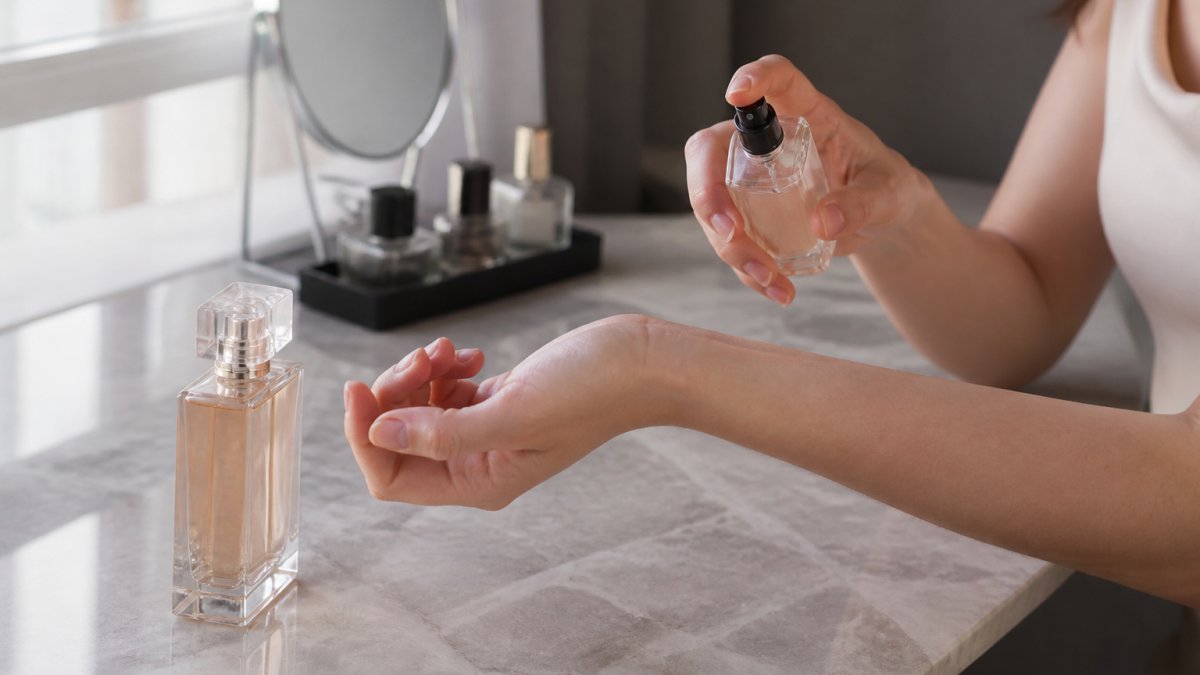
How to Make Perfume Last Longer: 7 Practical Steps

  1. Moisturize first. Apply unscented lotion to pulse points before spraying.
  2. Target pulse points. Wrists, neck, and behind the ears generate heat that projects scent.
  3. Do not rub. Rubbing crushes top notes and accelerates evaporation.
  4. Spray on damp skin. Post-shower application binds molecules more effectively.
  5. Layer with matching body products. Same scent family extends the dry down.
  6. Apply to hair or clothing. Fabric holds base notes for days.
  7. Store away from heat and light. A cool, dark drawer protects the formula.
Close-up of a person applying perfume to their wrist pulse point, glass bottle resting on a marble vanity, soft natural window light

Storage and Maturation: Protecting Your Investment

Most guides stop at "keep it in a cool, dark place." That is correct but incomplete. Niche bottles cost more per milliliter than designer releases, and the two forces that destroy them, oxidation and thermal cycling, are both manageable once you understand what they do to the molecules inside.

What Actually Degrades a Fragrance

  • Ultraviolet light breaks the bonds in aromatic molecules, which is why citrus and floral top notes turn sharp or "off" first. A clear glass bottle on a sunny shelf will smell noticeably different within a few months.
  • Heat accelerates every chemical reaction in the bottle, including the ones you do not want. Sustained exposure above roughly 80°F speeds oxidation and can cause the alcohol base to separate from heavier oils.
  • Oxygen enters every time you spray. A bottle that is 90% full ages far more slowly than one that is 10% full, because there is less headspace for oxygen to react with the remaining liquid.
  • Humidity attacks the packaging more than the juice, bathroom storage rusts caps, warps labels, and lets moisture into the sprayer mechanism.

Practical Storage Rules

  1. Keep the original box. It blocks light and slows temperature swings. This is the single highest-value habit.
  2. Store below 70°F and away from windows. A closet shelf or dresser drawer beats a bathroom vanity every time.
  3. Minimize headspace on partial bottles. Decanting the last third of a bottle into a smaller atomizer reduces oxygen exposure.
  4. Do not refrigerate unless you commit to it. A stable cool drawer is better than a fridge that gets opened twenty times a day and cycles the temperature.
  5. Expect 3-5 years of peak performance for most EDPs and extraits stored correctly. Citric-heavy compositions may turn sooner; resinous and oud-based ones often hold for longer.

Maceration vs Maturation: What Collectors Actually Mean

  • Maceration is a production step. After a formula is blended, the house lets it rest, often for weeks, so the raw materials marry before the juice is bottled. You cannot do this at home; it already happened before your bottle shipped.
  • Maturation (sometimes called "resting" or "settling") is what happens after you open the bottle. Exposure to a small amount of oxygen and time can soften a harsh opening and let base notes integrate more fully. This is the effect collectors describe when they say a new bottle "opens up" after a month.
Key Takeaway Storage protects longevity; maturation refines character. Neither one can rescue a poorly built formula, but both can preserve a good one for years. If you are investing in niche bottles, buy the box, keep the box, and store the box somewhere cool and dark.

Frequently Asked Questions

Do higher concentrations of perfume oil improve longevity?

Yes, up to a point. Niche perfumes typically use 15-30% oil concentration, while designer fragrances use 5-15%, according to Alexandria UK (2026). That higher concentration directly extends wear time, which is why niche fragrance longevity often reaches 8-24 hours. However, concentration alone does not guarantee performance. The quality of fixatives, base notes, and how the formula interacts with your skin chemistry all play a role. A well-constructed eau de parfum can outlast a poorly made extrait.

Are niche fragrances worth the higher price point?

For buyers who prioritize longevity and unique scent profiles, yes. Over 45% of premium fragrance sales are driven by enhanced longevity, according to Scento (2026). Niche houses also invest in higher-quality fixatives and synthetic aroma chemicals like Ambroxan, which amplify projection and wear time. If you want a fragrance that lasts a full workday and smells unlike anything at a department store counter, the premium is justified. If you prefer lighter, more familiar scents, designer options remain excellent.

How can I make my fragrance last longer throughout the day?

Start with hydrated skin, since dry skin absorbs perfume faster. Apply to pulse points: wrists, neck, and behind the ears. Layer with an unscented moisturizer or a matching body lotion before spraying. Spray from 6-8 inches away and avoid rubbing your wrists together, which breaks down the fragrance molecules. Store your bottle away from sunlight and heat. If you want maximum longevity, choose an extrait de parfum or eau de parfum over an eau de toilette.

What makes niche fragrances different from designer perfumes?

Niche houses typically use higher oil concentrations (15-30% vs 5-15%), more expensive raw materials, and fewer mass-market constraints. They also prioritize artistic freedom over broad appeal. Designer brands produce at scale, which allows for extensive testing and consistency but often results in lighter formulations designed to be inoffensive. Niche fragrance longevity benefits from denser base notes like oud, ambergris, and sandalwood, which evaporate slowly and anchor the scent to your skin for hours longer.


Finding a fragrance that genuinely lasts means understanding concentration, fixatives, and how your own skin responds, not just trusting a label. AppleMango Fragrances curates 100% authentic niche, designer, and Middle Eastern scents, including long-wearing extraits like Queening by Mind Games and Ani by Nishane, all shipped fast from within the United States. Explore the collection and find the scent that stays with you from morning to midnight.

Previous article Best Middle Eastern Fragrance Brands: 2026 Review
Next article AppleMango Fragrances: Niche Perfume Curation Explained

Compare products

{"one"=>"Select 2 or 3 items to compare", "other"=>"{{ count }} of 3 items selected"}

Select first item to compare

Select second item to compare

Select third item to compare

Compare