
Expert Support
Available 24/7 via chat
Available 24/7 via chat

Last Updated: September 12, 2026
Grey market perfume is authentic fragrance sold through unauthorized distribution channels rather than by the brand or its approved retailers. The global perfume market is projected to reach $55.83 billion in 2026, and a meaningful share of that volume moves outside official supply chains (Fortune Business Insights perfume market analysis). Here is the distinction that matters: grey market goods are genuine, while counterfeit goods are not. A bottle diverted from an overseas allocation is still real perfume. A refilled bottle sold as new is fraud. That gap between "unauthorized" and "fake" is where most buyer confusion lives.
Inventory enters unauthorized channels through four main routes: overstock, international price arbitrage, discontinued scents, and resale of tester units (Gouttes Rares on [grey market(/products/modern-muse-by-estee-lauder-eau-de-parfum-spray-1-7-oz-women) supply routes | gouttesrares.com]). Price arbitrage is the engine. A fragrance priced higher in one region gets purchased where it is cheaper and resold where it is not. Overstock and inventory liquidation add volume when retailers clear shelves. Tester units, never meant for resale, sometimes surface too. The circulation of these diverted goods is now treated as a structural drag on the fragrance industry's pricing stability, not a minor side channel (Mordor Intelligence fragrance market report).
| Source Route | Typical Origin | Buyer Risk Level |
|---|---|---|
| Overstock | Retailer clearance | Low |
| Price arbitrage | Cross-region resale | Low to moderate |
| Discontinued scents | Old inventory | Moderate (age) |
| Tester resale | Store display units | High (condition) |
Learning how to spot fake designer perfumes starts with packaging authenticity, not price. Counterfeits usually fail on details a genuine grey market bottle passes: uneven label alignment, misspelled text, a cap that does not seat properly, or a batch code that returns nothing. Genuine diverted stock keeps the manufacturer's packaging intact.
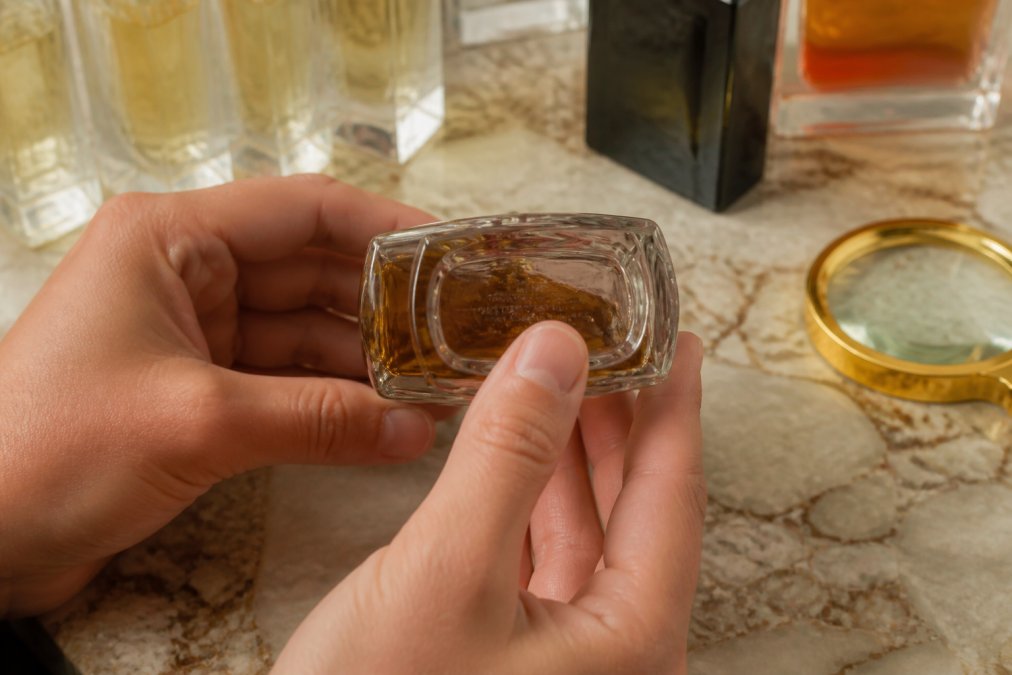
Check these in order:
The Traceability Hub notes that diverted products often carry authenticity verification problems precisely because they bypass authorized handling (The Traceability Hub on perfume traceability).
The grey market vs authorized retailer comparison comes down to three things: price, warranty, and handling. Authorized retailers buy directly from the brand, store stock to specification, and honor manufacturer warranty and returns. Unauthorized sellers offer lower prices because they skip those obligations. Department store pricing carries the brand's markup; grey market pricing strips it out. What you gain is cost. What you give up is recourse.
A perfume batch code checker is the fastest way to confirm a bottle's production date and authenticity, and it is the single step most buyers skip. Every major house stamps a batch code on the bottle and the box, usually four to eight alphanumeric characters, sometimes laser-etched into the glass near the base, sometimes printed on a label, sometimes stamped on the crimp of the sprayer collar. The code is not a serial number. It is a production lot identifier that encodes the date and facility the bottle was filled at, which is why the same fragrance bought twice can carry two different codes and both be genuine.
Here is the practical workflow:
Two caveats worth knowing. First, a valid batch code proves the packaging is consistent with a real production run, it does not by itself prove the liquid inside is untouched, which is why the tampering question gets its own treatment. Second, counterfeiters have gotten better at copying codes, so a code that returns a clean result is necessary but not sufficient. Treat batch verification as one filter in a stack, not a verdict.
The genuine risk in grey market buying is rarely fake product. It is the two things unauthorized channels strip out: controlled storage and manufacturer recourse. Understanding both is what separates a smart grey market purchase from a gamble.
Storage and shelf life. Fragrance is a chemical solution, alcohol, water, and aromatic compounds, and it degrades on a predictable curve when exposed to heat, direct light, and oxygen. Authorized retail and brand warehouses store stock in climate-controlled, light-controlled conditions and rotate it on a schedule tied to sell-through. Diverted inventory may pass through jobber warehouses, liquidation pallets, or a reseller's garage where temperatures swing and boxes sit in sunlight for months. The result is not spoilage in the food-safety sense; it is a slow drift in the top notes, a flattening of the opening, and in bad cases a sour or vinegar-tinged drydown. A bottle that is chemically genuine can still smell wrong because of how it was kept.
What to ask and check:
Warranty and returns. This is the gap competitors gloss over. When you buy from an authorized retailer, the manufacturer's warranty and the retailer's return window both apply, and in many states consumer-protection statutes give you additional remedies for goods that are not as described. When you buy from an unauthorized seller, the manufacturer has no obligation to you at all, you are not their customer, and they will typically decline to service, replace, or authenticate a bottle bought outside their channel. Your only remedy is whatever the reseller's own policy says, and that policy may be nonexistent, may require you to pay return shipping, or may exclude opened bottles entirely.
The tampering question, briefly. The fear that grey market bottles are routinely refilled or diluted is overstated relative to the storage risk, but it is not zero. Refilling is labor-intensive and rarely worth it on low-margin bottles; it shows up more on high-value, high-demand scents. The realistic defense is the same stack: matching batch codes, intact factory seals, a straight spray tube, and a seller who will stand behind the sale. If a price is dramatically below every other source, treat that as a signal to verify harder, not as a bargain.
Buying grey market perfume trades certainty for savings. The trade-off is real, and it cuts both ways.
Pros:
Cons:
For buyers who verify before purchasing, the savings can be worth it. For those who want zero risk, authorized retail remains the safer path. AppleMango Fragrances sources 100% authentic niche, designer, indie, and Middle Eastern fragrances and ships fast across the country, so enthusiasts can explore without navigating unauthorized channels themselves. As consumer behavior shifts toward online discovery and AI-powered sampling reduces blind-buy regret, knowing exactly where your bottle came from matters more than ever (Scento 2026 fragrance consumer behavior).
Grey market perfume is authentic fragrance sold through unauthorized distribution channels. The liquid inside was made by the original brand, but the bottle reached the seller through overstock, price arbitrage, or discontinued inventory rather than the brand's approved retail network. Legitimacy depends on the specific seller. A grey market bottle can be 100% genuine, but it may have been stored improperly or lack a manufacturer warranty. Always verify batch codes and buy from sellers who guarantee authenticity.
No. Buying grey market perfume for personal use is legal in the United States. The grey market exists because of legal gaps in how goods move between regions and retailers. Brands dislike it because it undercuts their pricing and control, but consumers are not breaking any law by purchasing authentic products from unauthorized sellers. The risk is practical, not legal: you may lose warranty coverage or receive a bottle that was stored poorly.
Grey market perfume is genuine product sold outside authorized channels. Counterfeit perfume is fake: it copies the brand's packaging and name but contains different liquid, often made with cheap ingredients. The confusion happens because both appear on discount sites. A grey market bottle will pass a batch code check and match the brand's packaging standards. A counterfeit usually fails batch verification and may show label errors, odd bottle weight, or a scent that fades within minutes.
In most cases, yes. Manufacturer warranties and satisfaction guarantees typically apply only to products bought from authorized retailers. If you buy grey market perfume and the bottle arrives damaged or the scent seems off, the brand has no obligation to replace it. That is why the reseller's own return policy matters. Before buying, check whether the seller accepts returns for opened bottles and how they handle authenticity disputes.
The challenge with grey market perfume is that authenticity and safety are two different questions. A bottle can be genuine and still arrive degraded, with no warranty behind it. AppleMango Fragrances removes that uncertainty by curating 100% authentic fragrances from top luxury brands, verifying every bottle, and delivering quickly across the country. Explore the collection and find the scent that defines your style, backed by sourcing you can trust.
{"one"=>"Select 2 or 3 items to compare", "other"=>"{{ count }} of 3 items selected"}