
Expert Support
Available 24/7 via chat
Available 24/7 via chat

Last Updated: September 17, 2026
Why are designer perfumes so expensive? The short answer: you are paying for liquid, but you are billed for everything around it, which is exactly why are designer perfumes so expensive. The global perfume market was valued at $60.0 billion in 2025 and is projected to climb to $96.1 billion by 2033, growing at a 6.1% compound annual rate (Perfume Market Size, Share & Trends Report, 2026-2033). At AppleMango Fragrances, we field the same question daily from customers staring at $150-plus price tags: what actually justifies the number?
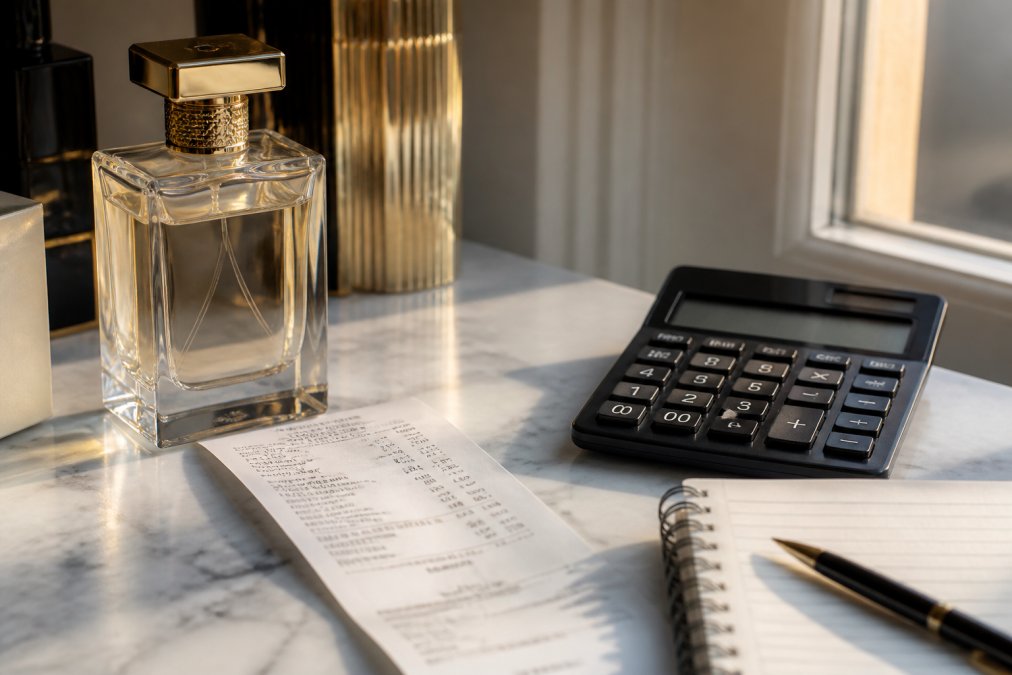
Here is the uncomfortable truth most guides skip. The juice inside a designer bottle often costs a fraction of the retail price. The rest is packaging, marketing, retail markup, and the psychology of luxury itself.
Raw materials are the smallest slice of a designer bottle's price, even when the formula uses genuinely rare ingredients. The luxury fragrance market reached €57.28 billion in 2026, driven partly by demand for rare, high-quality materials and sustainability commitments (Perfume Pricing Statistics 2026).
Marketing and packaging consume a larger share of a designer perfume's retail price than the fragrance itself. That is the part every guide says. The more useful question is why the spending works, and why a higher price can make a scent sell better, not worse.
A designer launch is a multi-year capital project, not a single ad buy. The recurring line items:
Understanding this does not make the price unfair. It makes it legible. Once you can separate the scent from the signal, you can choose which one you are shopping for.
Santal by Creed Eau De Parfum Spray 3.3 →
Concentration, perfumer expertise, and distribution together shape the final retail number. An eau de parfum (EDP) typically carries 15-20% fragrance oil, while an eau de toilette (EDT) runs closer to 5-15%, which affects both longevity and sillage.

| Factor | Lower Cost | Higher Cost |
|---|---|---|
| Concentration | Eau de toilette | Eau de parfum, extrait |
| Perfumer | In-house junior | Named master perfumer |
| Bottle | Stock glass | Custom mold, heavy cap |
| Distribution | Direct-to-consumer | Department store counter |
Two cost layers almost no lifestyle roundup explains properly are compliance and the secondary market. Together they account for why the same bottle can carry three different prices in the same week.
In the United States, a fragrance sold at retail has to clear several gates before it reaches a counter:
Authorized retailers buy at wholesale under brand-controlled pricing and agree not to advertise below a set floor. Grey-market sellers operate outside that agreement. Their inventory typically comes from one of a few sources:
| Format | Typical size | Example price | Cost per ml |
|---|---|---|---|
| Eau de toilette | 1.7 oz (50 ml) | $95 | ~$1.90 |
| Eau de parfum | 1.7 oz (50 ml) | $150 | ~$3.00 |
| Eau de parfum | 3.3 oz (100 ml) | $330 | ~$3.30 |
| Extrait de parfum | 2.5 oz (75 ml) | $395 | ~$5.27 |
Once you can read the value chain, compliance, wholesale, diversion, and per-ml math, the price tag stops being a mystery and starts being a decision.

Finding the best luxury perfume deals in 2026 means buying authenticated overstock, not chasing the lowest number on the page. Expensive fragrances are selling faster this year as buyers treat them as investments in presence and permanence (Why Expensive Fragrances Are Selling Faster in 2026), and that demand makes verification essential.
Storing perfume correctly means keeping it cool, dark, and sealed, away from heat and direct light. Heat and UV exposure degrade the top notes first, then the base notes, and once a formula breaks down it does not recover.
Santal by Creed Eau De Parfum Spray 3.3 →

Follow these habits:
Making perfume last longer starts with application, not the formula. Fragrance fades faster on dry skin, so prep the canvas before you spray.
It depends on what you value. If you want a complex olfactory profile with distinct top notes, base notes, and strong sillage, the higher cost often reflects better raw materials and a higher fragrance concentration. If you want a complex olfactory profile with distinct top notes, base notes, and strong sillage, the higher cost often reflects better raw materials and a higher fragrance concentration. However, some critics argue that designer perfumes smell generic and the price is tied more to branding than uniqueness. If longevity and a specific scent composition matter to you, the investment can be worth it.
The biggest factors are raw materials, marketing spend, and packaging. Rare ingredients like oud and natural extracts drive up costs, as do celebrity campaigns and luxury store rent. Concentration levels also matter: an eau de parfum uses more fragrance oil than an eau de toilette. Supply chain and distribution costs add another layer. In 2026, regional tariffs and sustainability initiatives have further increased retail markup, pushing famous designer perfumes to $150 and up.
Yes, but not always in the way you expect. Expensive perfumes often use higher concentrations of natural extracts and aroma chemicals, which can improve longevity and sillage. They also invest in perfumer expertise and bottle aesthetics. However, some affordable fragrances use similar synthetic compounds and can perform well. The key difference is often in the olfactory profile's complexity and how the scent evolves on your skin. Price does not always guarantee better performance, so testing is essential.
The cheapest way is to buy from a trusted retailer that offers authentic products without the luxury markup. Look for price-per-ml deals on eau de parfum sprays, and consider travel sizes or gift sets. Avoid grey market sellers that cannot verify authenticity. In 2026, many online retailers curate niche and designer fragrances at competitive prices. Always check the return policy and shipping speed. Buying unopened merchandise from a reputable source ensures you get the real scent without paying for the brand's marketing spend.
{"one"=>"Select 2 or 3 items to compare", "other"=>"{{ count }} of 3 items selected"}