
Expert Support
Available 24/7 via chat
Available 24/7 via chat

Last Updated: September 17, 2026
One in three adults now buys perfume without testing it first. According to Scento's 2026 perfume consumer behavior report, 33% of adults will purchase a fragrance sight unseen, and the habit is reshaping how the industry sells scent. That number surprises people who assume everyone still visits a counter first.
Fragrance notes are the individual scent components that make up a perfume, listed in the order they appear on your skin. Reading them is the closest thing to smelling a bottle through a screen.
Every fragrance unfolds in three stages, often called the fragrance pyramid.
Olfactory families group scents by shared character. Knowing your family narrows hundreds of bottles down to a handful.
| Family | Typical Notes | Best For |
|---|---|---|
| Citrus | Bergamot, lemon, neroli | Daytime, summer |
| Floral | Rose, jasmine, peony | Spring, everyday wear |
| Woody | Cedar, sandalwood, vetiver | Fall, evening |
| Gourmand | Vanilla, caramel, tonka | Cold weather, nights out |
| Oriental | Amber, spice, resin | Formal occasions |
Perfume concentration tells you how strong a fragrance is and how long it lasts. The label usually says it outright.
Buying perfume without smelling it comes down to three moves: define your profile, test with samples, and buy from a retailer you can verify. Do those in order and your odds of a keeper go way up.
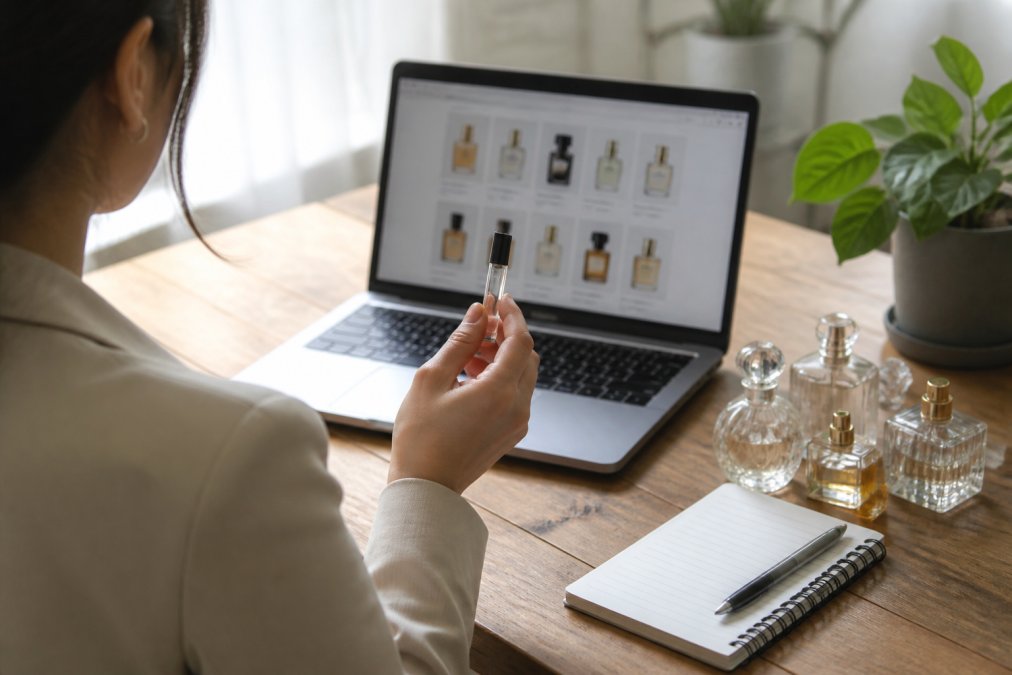
Start with what you already know. List two or three perfumes you've worn and loved. Note their families, their main notes, and their concentration. That short list is your scent profile, and it's the filter for everything else.
Samples and discovery sets are the single best risk-reduction tool for blind buying. A discovery set gives you several small vials from one house or family, usually for far less than a full bottle.
If you're buying from a resale marketplace, ask the seller for a photo of the batch code on the bottle and the box in the same frame, plus a receipt from an authorized purchase if they have one. Sellers who won't provide either are a pass.
The best blind buy perfumes for beginners are versatile, well-reviewed scents in popular families. They're the ones people describe the same way over and over, which means fewer surprises.
Most guides hand you a list. A list doesn't help if you already own three fresh citrus scents and want something different. Use your current collection as the input and let the logic narrow the field.
These are widely reviewed, widely available, and described consistently across buyer communities, the three traits that make a blind buy survivable. Treat them as reference points, not endorsements, and sample before you commit to a full bottle.
| Family | What to Look For | Why It's a Safe First Buy |
|---|---|---|
| Fresh citrus / aromatic | Bergamot, neroli, light lavender | Bright, low-risk, hard to dislike |
| Clean floral | Rose, peony, jasmine with musk | Familiar, office-friendly |
| Soft gourmand | Vanilla, tonka, light caramel | Warm without being heavy |
| Woody | Cedar, sandalwood, vetiver | Versatile across seasons |
| Floral-woody | Rose or iris over cedar | Adds depth to a floral you already like |
A five-star average tells you almost nothing on its own. What you want is agreement on specifics. Scan the reviews and look for:
The biggest blind-buy mistake is trusting marketing copy over notes and reviews. A pretty bottle tells you nothing about how a scent wears on your skin.
Other traps to skip:
Blind buying fragrance carries real risk, but the right process turns guesswork into a calculated bet. Define your profile, test with samples, and buy from a seller who guarantees authenticity and stands behind returns. AppleMango Fragrances offers a curated lineup of authentic niche, designer, indie, and Middle Eastern scents, with fast shipping, and a collection built to help you find the one that fits.
Start by identifying your preferred olfactory family, such as gourmand, floral, or woody. Research the fragrance pyramid to understand top, heart, and base notes. Order a sample vial or discovery set before committing to a full bottle. Check the retailer's return policy and verify authenticity through batch codes. According to 2026 data from Scento, 33% of adults already purchase perfume without testing it first, so you are not alone in this approach.
A blind buy means purchasing a fragrance without having smelled it beforehand. The risk comes from skin chemistry: a scent can smell different on you than on paper or on someone else. To reduce risk, buy a decant or sample vial first. Research shows 70% of fragrance preferences are driven by scent memory, so if a fragrance shares notes with scents you already love, your odds of enjoying it improve significantly.
Eau de Toilette typically contains 5-15% fragrance oil, while Eau de Parfum contains 15-20%. Higher concentration generally means longer longevity and stronger projection. Parfum, or Extrait, can reach 20-30% and lasts longest. If you want a scent that stays close to the skin for work, an EDT works well. For evening wear or lasting power, EDP or Parfum is the better choice. Always check the concentration listed on the product page.
Compare the fragrance pyramid to scents you already wear and enjoy. If you love vanilla and amber base notes, look for gourmand or oriental fragrances. Read reviews from real buyers who describe how the scent performs on skin, not just how it smells in the bottle. Industry data from Spate in 2026 shows consumers increasingly prioritize peer reviews over marketing to understand scent profiles, making community feedback a reliable research tool.
{"one"=>"Select 2 or 3 items to compare", "other"=>"{{ count }} of 3 items selected"}